150 th anniversary of Lesia Ukrainka

Lesia Ukrainka is one of the most famous figures in the history of Ukrainian literature. She left behind a great literary heritage: poetry and prose, journalistic articles, translations of world classics.


150 th anniversary of Lesia Ukrainka
Lesia Ukrainka is one of the most famous figures in the history of Ukrainian literature. She left behind a great literary heritage: poetry and prose, journalistic articles, translations of world classics.
St Valentine's Day With My Students!

Who was Saint Valentine? When did Valentine’s Day start? And how did hearts, flowers, love letters and chocolate candies get associated with this holiday? Valentine's Day Week in our Gymnasium is always a great opportunity to take a closer look at Saint Valentine, the history of Valentine’s Day and to answer all these questions.


Groundhog Day

How did the groundhog come by this honour?
It stems from the ancient
belief that hibernating creatures were able to predict the arrival of
springtime by their emergence.
The German immigrants
known as Pennsylvania Dutch brought the tradition to
Candlemas is one of the four "cross-quarters" of the year, occurring half way between the first day of winter and the first day of spring. Traditionally, it was believed that if Candlemas was sunny, the remaining six weeks of winter would be stormy and cold. But if it rained or snowed on Candlemas, the rest of the winter would be mild. If an animal "sees its shadow," it must be sunny.
Besides, spring always arrives on or near March 21, so whether the groundhog decides to return to his den or remain above ground, the sad fact is spring will always have to wait at least six more.
Project Work "Strange Houses Around The World"
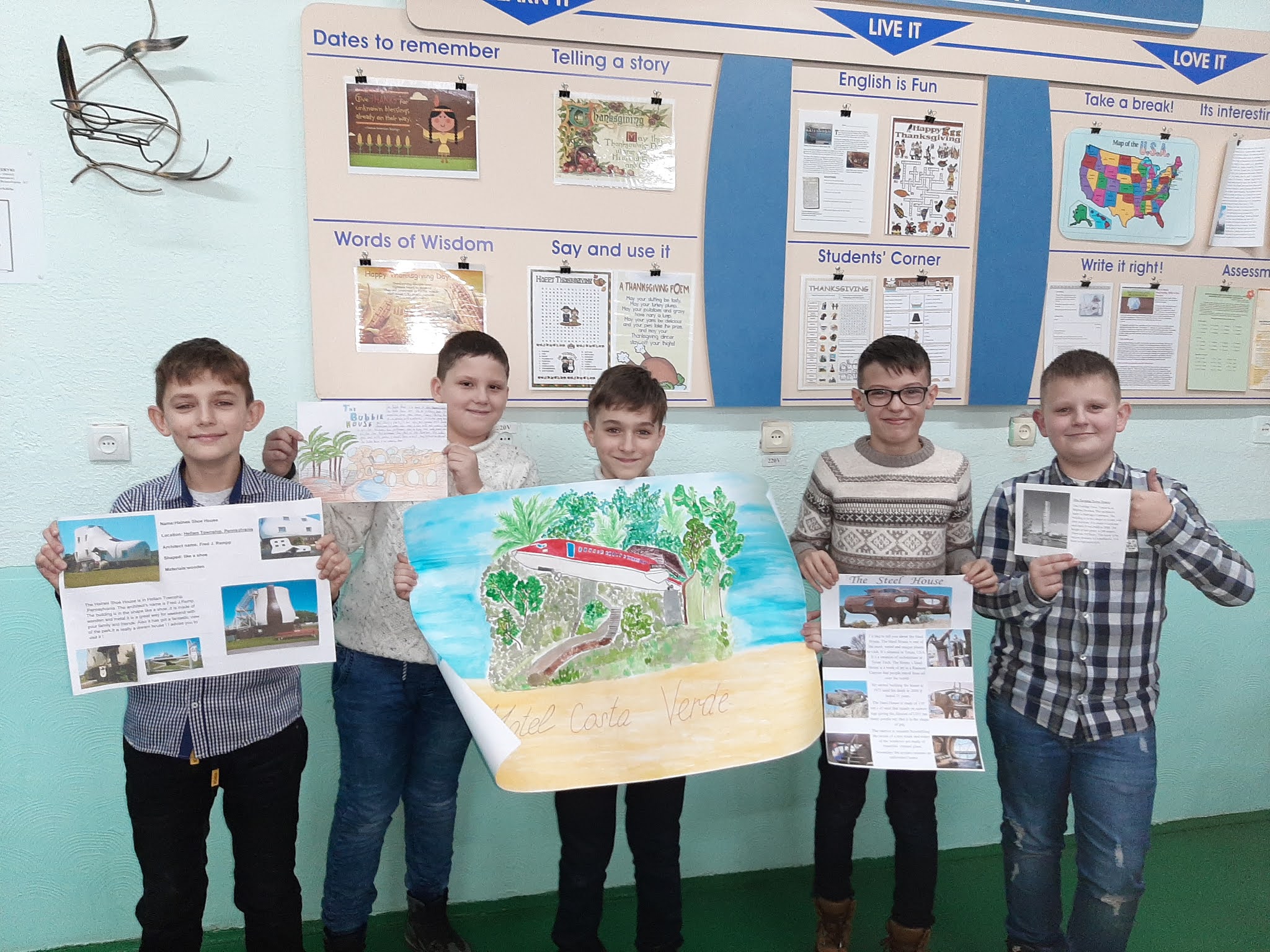
My 5th formers received a task to do a project on strange houses around the world according to the following plan: 1.House Name 2. Location 3. Shape 4. House outside 5. House inside 6. Recommendation. They did some online research, collected information about strange houses around the world and prepared their posters. They also included some photos and wrote a few sentences about the house. Here is the result!




Ukraine Global Scholars 2021!


